Email Us
office@francischiroclinic.com
Call Us
920.892.4833
Blind Faith
- Home
- Blind Faith
Dear Friends,
Last September, I watched my nephew race in the Ironman Wisconsin triathlon. While waiting for him to exit the swim, a blind woman came out of the water tethered to a sighted athlete. She ran out of the water, pumping her fists and shouting, “I did it!!!” What an incredible feat.
Imagine the trust that woman placed in her companion—entering the water and following their lead while surrounded by thousands of other athletes. I’ve always described an Ironman swim as an hour-long underwater bar fight. You’re shoved, swum over, kicked, and grabbed. It’s anything but a calm lake swim.
During the 2009 Ironman in Nice, France, I was halfway through the swim when I noticed I wasn’t being touched at all. My heart rate was steady, and I was moving along at my usual slow-and-steady pace. After a few minutes I thought, “This can’t be right. No one is grabbing my ankles?” I popped my head up and realized I was completely alone—I had drifted way off course, practically halfway to Morocco!
Ok, slight exaggeration, but the point remains: the courage it took for that woman to get in the water and complete that swim blind is astounding. What inner drive she must have had.
The day before, during the half Ironman, I saw another example: a visually impaired athlete and her sighted partner passing me on a tandem bike. Over the years, I’ve witnessed many physically challenged athletes racing in Ironman events. Each time, I’m blown away.
That’s blind faith.
I no longer race the full 140.6 distance, but I still love to participate in—or cheer on—athletic adventures that end with those three powerful words: “I DID IT!” Whether it’s an Ironman finish line or a child tying their shoes for the first time, the feeling is the same.
Self-reliance is an undervalued trait. If we were all more self-reliant, many government programs would be obsolete. Too often, government and health care systems tend to make you NEED them. That is not empowerment or self-reliance.
That’s why, when people ask, “Why do you treat patients in a supportive way?” my answer is simple: preventative and supportive care is the best care. It allows me to catch issues early and give patients the tools they need so they don’t end up in crisis. Living from one health crisis to the next is not only miserable—it’s expensive, for both the individual and society.
So take the leap. Find ways—big and small—to challenge yourself. Keep seeking finish lines where you can proudly shout, “I DID IT!”
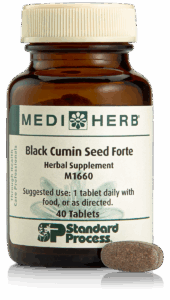
Black Cumin Seed Forte: an incredibly versatile herb that supports a wide range of health journeys, thanks to its strong antioxidant and anti-inflammatory properties, as well as its ability to promote respiratory health and healthy blood sugar metabolism.
God Bless,
Dr. Dan